My name is Emma Hart. I am from Rochester, New York, and study at Colgate University. My family passed down to me a love of both math and teaching; I remember drawing out marker worksheets to teach my little brother how to add, and I am told I tried to teach my second grade class about negative numbers (which did not go as positively as I imagined it would).
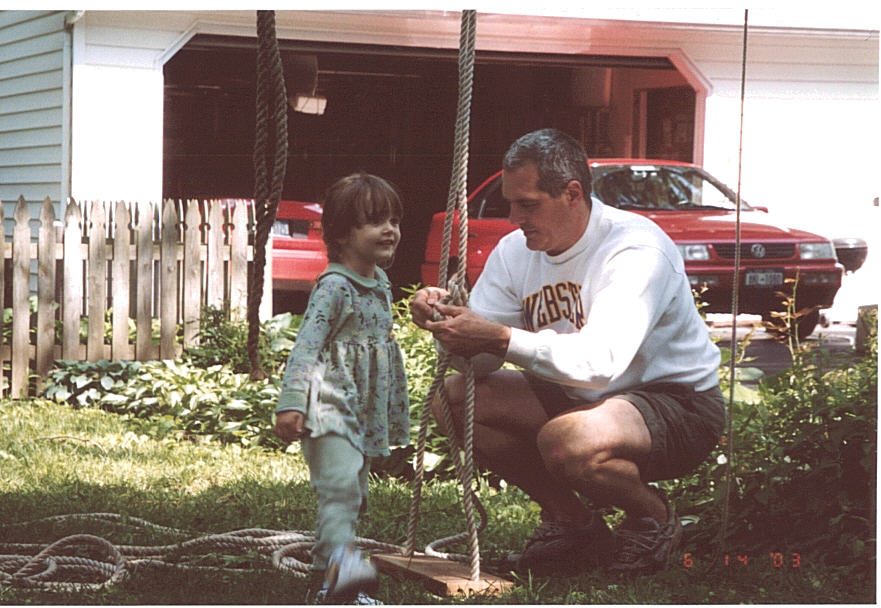
Since then, I have garnered much more experience in both math and teaching (now I teach my little brother about Runge Kutta Methods) and I am excited to pursue more. I have worked as a mathematics tutor in a variety of positions at Colgate — as a volunteer SAT teacher for local high school students, a peer tutor for Calculus students, and a Computational Mathematics class tutor and grader — and also as a peer writing consultant at Colgate’s Writing and Speaking Center.
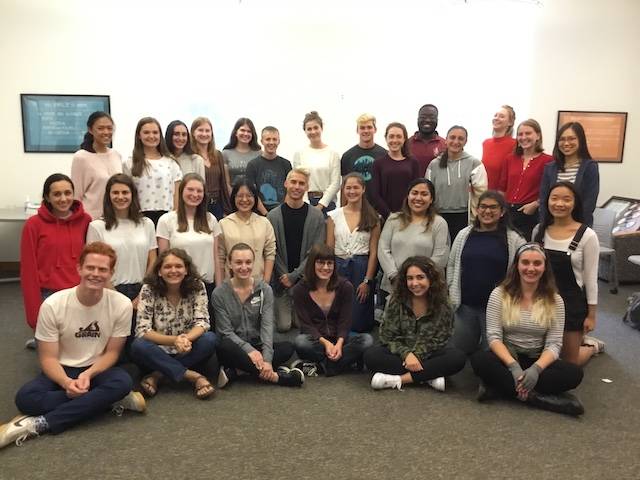
I have loved this work, and although there are those that see my work at the Writing Center as being somewhat disparate from my applied mathematics coursework, the more and more I have worked at the center and in applied mathematics research, the more and more deeply I find the two to be related. Complementing my mathematics coursework, that has taught me the tools and processes of numerical investigation, the self reflective work of the writing center has given me experience and enthusiasm to communicate those analyses as effectively and efficiently as I can.
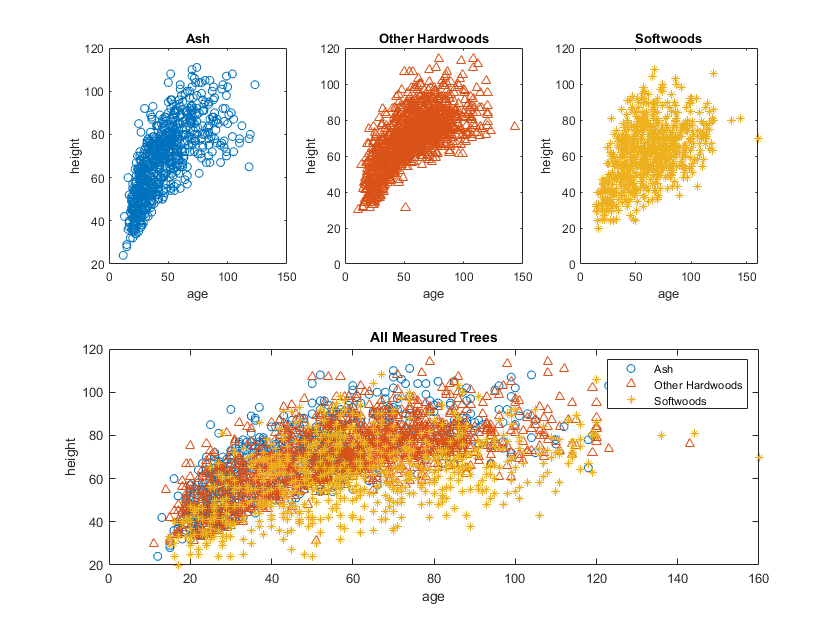
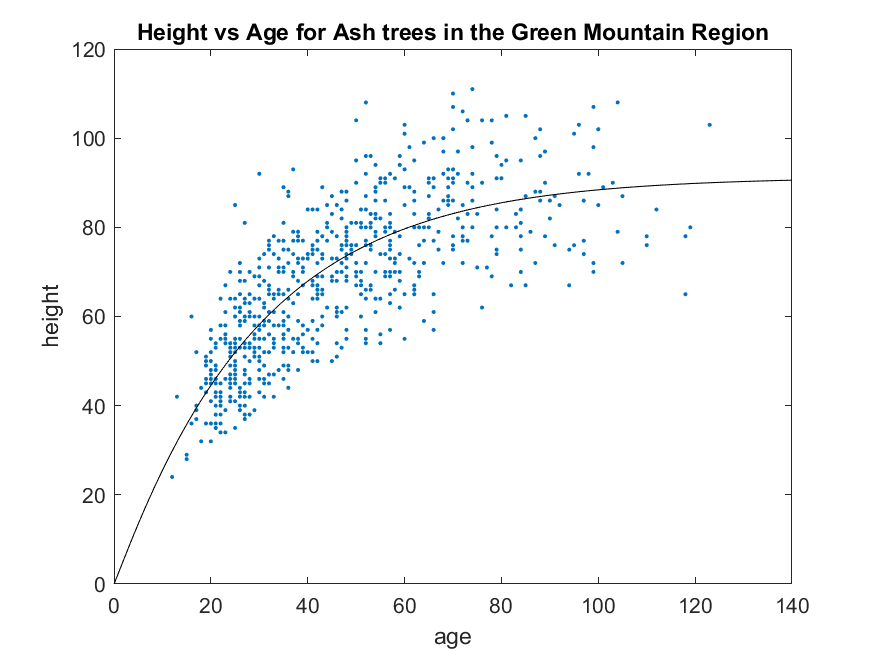
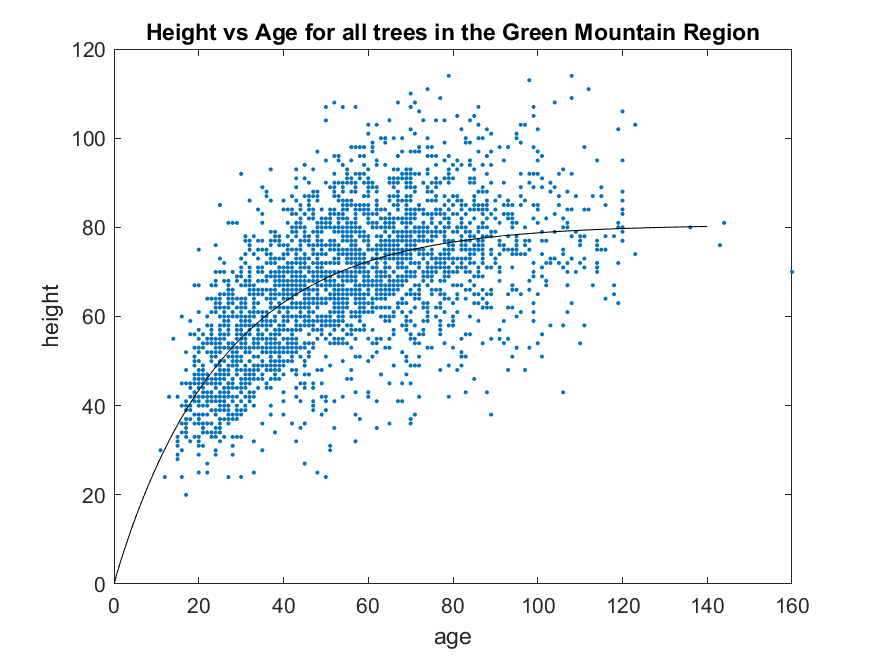
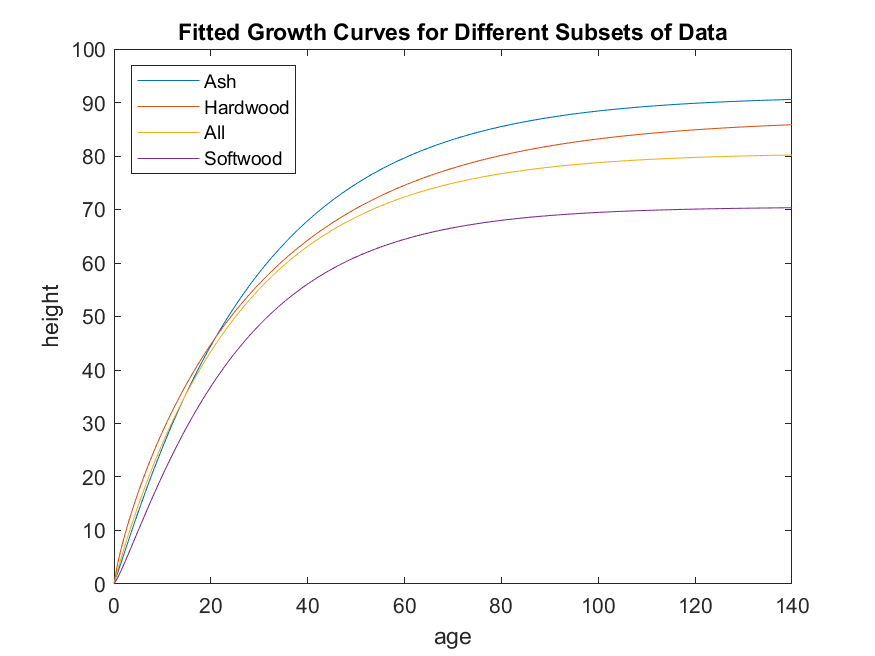
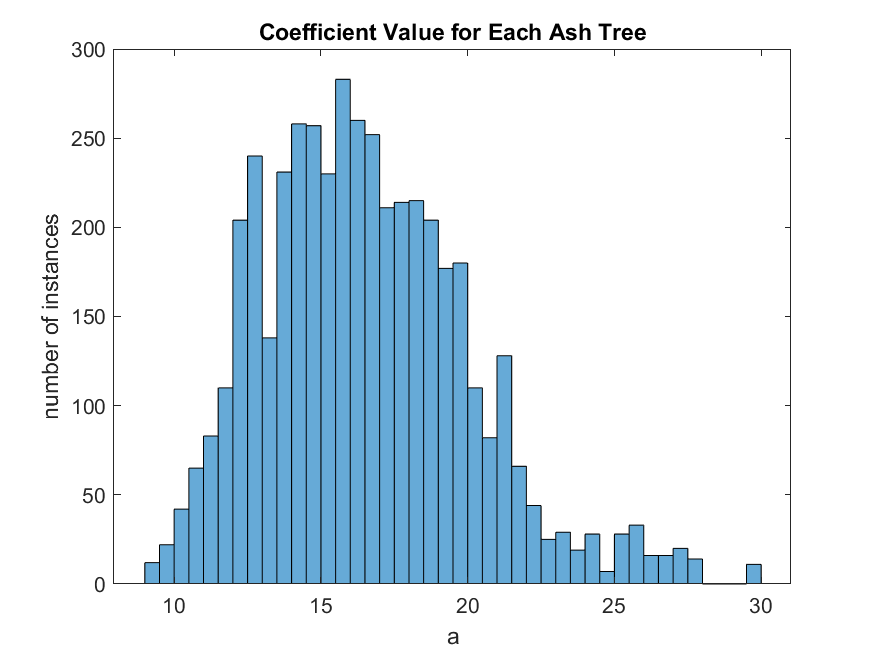
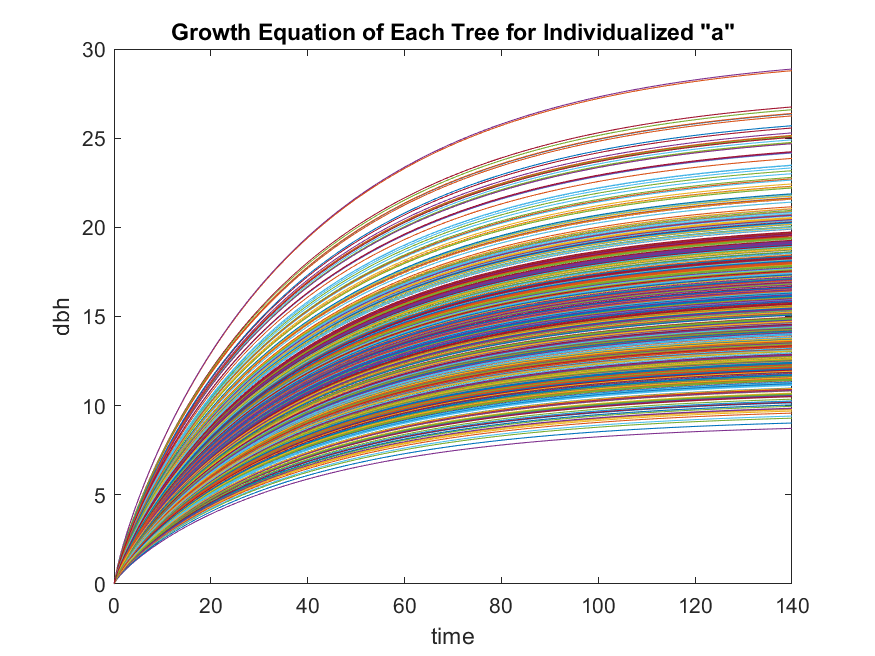
One of my first applied mathematics research experiences — where I felt the excitement of learning to present my mathematical work — was in an exploration of tree growth that I presented at the Hudson River Undergraduate Mathematics Conference [paper, presentation]. Learning about the growth of tree species that had surrounded me all my life and connecting that lived experience with the optimization methods and other tools of numerical analyses I had loved learning was an incredible feeling.
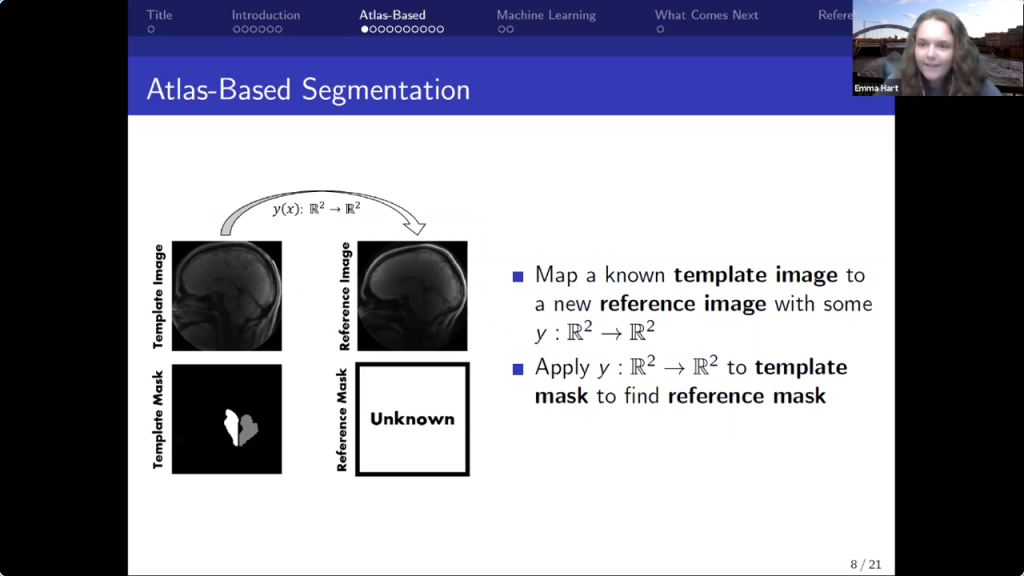
Interested in learning about how to work with less straightforward forms of data, I then worked with MR image data in Emory University’s 2021 REU/RET program. With a small team, I developed algorithms to more efficiently segment, or identify, the brainstem and cerebellum in a given brain MRI, to be used in the context of Type I Chiari Malformation diagnosis [paper]. Learning to preprocess and overcome issues with inconsistent data, to build on existing tools and methods, to refine our segmentation algorithms, and to carefully validate our algorithms’ abilities was challenging and engaging work.
I am currently working on my senior thesis, exploring the transition from smoldering to flaming combustion by creating and simulating a system of partial differential equations. So far, I have spent most of my time reviewing combustion literature, justifying the equations included in my model, and nondimensionalizing.
All of these experiences have made me excited to pursue further research in an applied mathematics graduate program, alongside further teaching as a graduate student. I think I am well suited for this kind of work, and that it is well suited to me. I am broadly interested in computational mathematics, numerical analysis, optimization, and data science, and I am looking forward to refining these interests with further work.