Over the summer I participated in the 2025 Photonics REU at the University of Rochester. I worked under Professor Jannick Rolland with PhD Student Anis Idrizović on developing a high-precision eye-tracker. As this work has not yet been published I’ll refrain from getting into the specifics. However, I’ll detail the specific eye-tracking method used, called Dual Purkinje Imaging.
Dual Purkinje Imaging
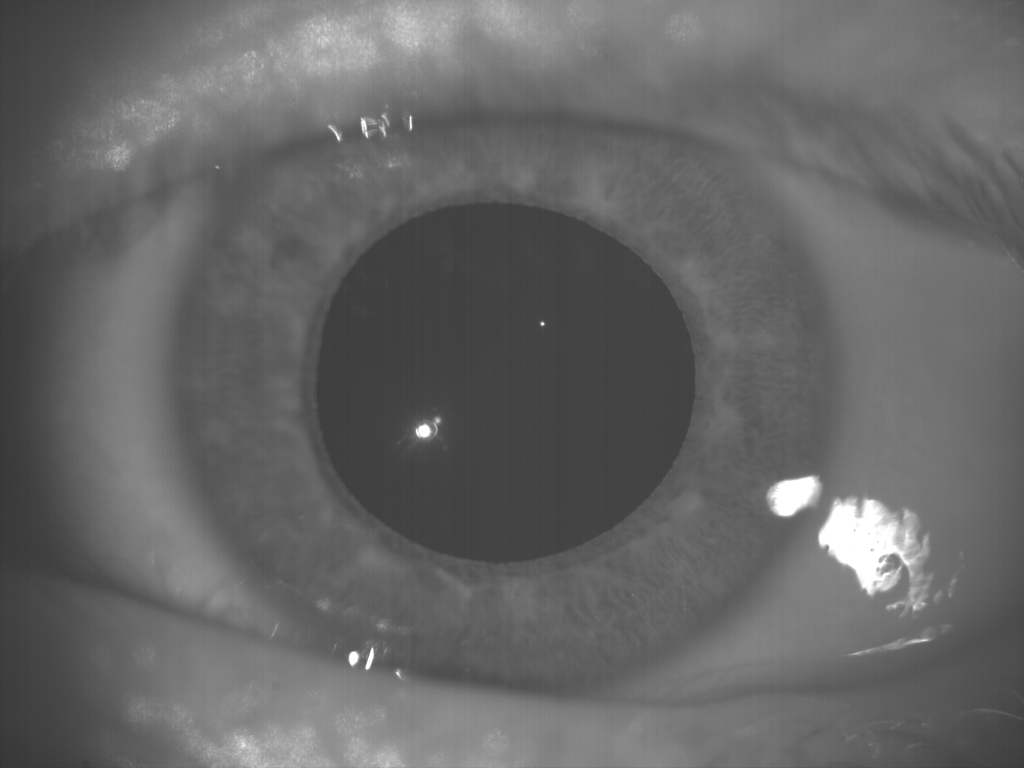
By shining a collimated beam at the eye, the light will reflect off of both the front and back surfaces of the cornea and lens. These partial reflections are called Purkinje Images and we utilize the first and fourth of these images, dubbed P1 and P4. Fortunately, P1 and P4 lie in approximately the same focal plane and their relative position is roughly linear with eye rotation. Thus by just tracking the positions of P1 and P4, one can back out how much the eye has rotated and then what the observer is looking at (given some reference point).